
I had been invited to this very select spiritual gathering on the strength of the piece I wrote, The Apocalyptic Vision: Ecological Breakdown and Spiritual Breakthrough. There I met Peter Dawkins who told me he ran the the Francis Bacon Research Trust. I liked him: quietly well-spoken, clearly well-educated, and one always felt in the presence of a great courtesy, that never advertises itself, but makes one feel comfortable.
I said that it seemed Rudolf Steiner didn’t like Francis Bacon, and blamed him for bringing into existence a totally dead, materialistic foundation for Scientific Method. Peter said he knew and respected Steiner’s position, and could well understand mine. He suggested that I look at material from Francis Bacon and from his Research Trust for myself, and see what I think.
I sat with that for several months, then found an extraordinary biography: Francis Bacon’s Personal Life Story, by Alfred Dodd. I’m so thankful I got it then, it is now £80 … It is in a class of its own, second to none, with astounding revelations, underpinned by such a wealth of evidence, so authoritatively stacked, that only laziness, ignorance or prejudice could fail to see its importance. All the Amazon reviews give the book the highest accolades.
Bacon, Paragon of Virtue and Excellence
Francis Bacon, I now discovered, was an illustrious polymath, beloved and very highly respected by many. He appeared to be the author of the work published under the name of William Shakespeare. His name was coded over and over again into the First Folio publications of the plays. There was much in Shakespeare’s content that told of Bacon’s hidden life.
For Francis Bacon was the elder legitimate son of Elizabeth, the so-called “Virgin Queen”. A lot could be kept private in high aristocratic circles in those days. He invented ciphers which are to be found everywhere in work connected with him, not just the plays. He oversaw the production of the King James Bible. But James later accused him of serious malfeasance, to which he pled guilty so as not to shame the King himself – Bacon had been framed by Robert Cecil who hated him as only a twisted soul can hate a virtuous one.
Bacon did indeed develop Scientific Method – but not with the materialistic indifference to soul qualities that Steiner imputes to him – Bacon’s soul life was rich and constantly overflowing with new gifts – like Steiner! Yet in the end, when his mother the Queen had died, and he had lost favour with King James, he was left without patronage, and at that point he chose to fake his death; he actually spent the last part of his life on the Continent, where he is mysteriously but strongly linked to Christian Rosenkreutz (see e.g. this classic).
Why the … … had Rudolf Steiner missed all this?? What was going on??
I couldn’t turn back. I couldn’t undo what I now knew. Neither could I dis-acknowledge the stunning and enduring help Steiner had given me.
What was this Mystery??
One day only in the last year or two, I thought about Steiner’s saying of Francis Bacon, that he was the reincarnation of Haroun el-Rashid – an Islamic ruler who surrounded himself with a court of highly able and cultured men. The name, I found out, means Aaron the Just. Hebrew names are amazingly significant …
… what if, I dared to think … … what if Haroun el-Rashid was a reincarnation of Aaron, brother to Moses? I was already starting to see it was possible that Steiner was a reincarnation of Moses … not Phinehas … again, I sensed an emerging pattern of truth-held-back … until now? …
I sat with it. It started to resonate. More and more. Aaron was Moses’ brother who had enabled Moses to speak out when he returned from the wilderness to lead Israel out of Egypt. Moses could not have done this without Aaron’s support and strong brotherly love. And yet, when Moses went up the mountain for 40 days to talk to God and receive the Ten Commandments, Aaron oversaw – permitted and encouraged – an apostasy. The people of Israel, fed up with waiting for Moses, had fashioned a “golden calf” straight out of the Egyptian spirit, and were busy “worshipping” it.
Egypt was the place in which the core work of the Age of Taurus-the-Bull unfolded; but now that Star Age had passed, and it was time for the “baton” to pass to young Israel. That was Moses’ calling; it was Aaron’s job to support him. But over the Golden Calf, Aaron failed, took a step backwards. We see fearful ripples of this failure working out through Aaron’s two eldest sons, soon after. After that, things settle down and Aaron takes full responsibility for becoming High Priest and training up others from his Levitical family.
Reading Bacon’s Karma …?
Karma could allow Aaron to experience a “rerun” of this “failure” in a future life. It accords well with reincarnation patterns I’ve seen, that he should receive the same name, that he should again rise to leadership, and that Haroun’s country’s religion of Islam should carry something of Aaron’s attachment to Egypt, in working with energies that were past their sell-by date. For Islam goes back to Abraham’s son Ishmael by his Egyptian concubine Hagar: an attempt to “help” God, using means that were familiar but actually were not appropriate to God, for the “right” son to be born. Nevertheless, God still had a place for “failures” like that, and promised Hagar that her son would flourish and that his twelve sons would become nations in their own right.
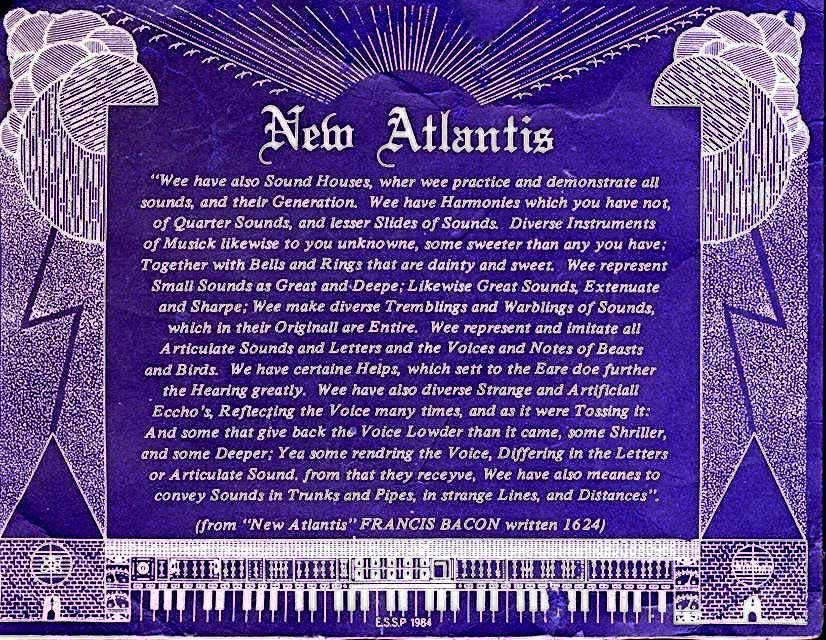
Francis Bacon was denied his legitimate right to become the monarch after the Queen died. The way that denial happened is so heartrending that one has to seriously consider the possibility of karma at work. Francis Bacon, aged only ten, spoke out in what seemed like defending a gross injustice, but the Queen jumped on him, and declared in the same breath that she was his mother and was now going to disinherit him – and promptly exiled him to the French court.
Young Francis went in great distress to the lady he had believed to be his mother, Lady Anne Bacon. She confirmed that what the Queen had said was indeed the truth – he was the Queen’s son, not hers. He did what a healthy, well-cared-for, well-educated child would do: he found outlets to sublimate his distress. He invented cipher to record his true story in code. But deciphering his legacy did not happen for a long time … it’s still unfolding, at the same time as many more ciphers are coming to light … Bible Codes …
Even More Extraordinary …
Yet the true story is extraordinary and even more unbelievable – until one examines the evidence. And it involves not just Francis Bacon. To do justice to even Francis Bacon, a paragon of excellence, let alone all the players in an extraordinary mystery, is quite impossible here. So I am providing an annotated list of books. Each is quite fascinating, and highly persuasive, but follows through its particular line of clues, mostly without referring to any of the others, and hence may contain false as well as true surmises.
If we piece together all the extraordinary pieces of evidence now surfacing, it seems there was a whole editorial team at work, linked perhaps to Raleigh’s School of Night in Sherborne. Members of the team used codes and clues to link their names to a whole series of anonymous plays whose production goes back to 1561 at least, and whose original authorship has to be ascribed to the Bassanos. This is several years before the birth of Shakespeare, when even the oldest claimant to Shakespearean authorship, Edward de Vere, was only 13.
Read (or at least glimpse) the following, and be amazed:
Shakespeare Exhumed: The Bassano Chronicles, by Dr Peter Matthews
(his Genesis of the Shakespearean Works gives proof of early dates)
Francis Bacon’s Personal Life Story, by Alfred Dodd
Breaking the Shakespeare Codes, by Robert Nield
Who Killed William Shakespeare?, by Simon Andrew Stirling
The Shakespeare Code, by Virginia Fellows
Oxford, Son of Queen Elizabeth 1st, by Paul Streitz
The De Vere Code, by Jonathan Bond
My Truth, by Brenda Harwood
Patterns of Evidence
We must now return to the karmic patterns. It seems as if the Elizabethan court was a place where forceful karma was arising around Queen Elizabeth and her many sons, with ancient esoteric Jewish connections. Yet here were wrought also the beautiful pentamers and keen human observations of the Plays, and the glories of the King James Bible, which was unchanged for nearly four centuries, and is still much loved for its poetry and its resonance with Spirit.
Could all this give a glimpse into the huge challenges Moses’ followers faced, once they had gone forth into the Great Unknown? Certainly, faith was vital, a key issue. In both places, people were wrestling with a “Brave New World” – Miranda’s words in The Tempest are so relevant. I see the “slings and arrows of outrageous fortune” challenging Francis Bacon to essentially face his karma and grow in stature.
I strongly encourage you to watch Tim Mahoney’s Patterns of Evidence: Exodus and Patterns of Evidence: the Moses controversy. Mahoney demonstrates with guileless clarity and exactitude of evidence, that (unlike what the current consensus of archaeology maintains) Exodus really happened, detail for detail exactly as the Bible states; that Moses must have written the Torah, as tradition always said. This means that he must have invented (or been given from G-d) the Paleo-Hebrew script, the first ever phonetic alphabet. Starting from the hieroglyphics in which he was trained, he had to produce a script that was essentially portable and easy to learn.
Bible Codes and Bacon’s Codes
N ow consider the current emergence of many Bible Codes alongside the emergence of the evidence for Elizabeth’s sons’ use of codes. Knowledge of the main form of Biblical coding, gematria, has been preserved for millennia, thank God, by esoteric Jewish groups – and is now written about openly in books and online. There really is a profound mystery here (another post!) – why Israel should be guided by G-d – JHVH – the LORD – into coding the Bible itself – it happens as Moses records the Torah, transforming hitherto oral history into written scrolls, at the time that people’s ability to memorize accurately enough was fading.
Aaron would be the first to master all this … grasp its importance … attune to the heavenly resonances and harmonies this new script could bring out … Now consider decasyllabic pentameters, basically ten syllables in pairs, stressed and unstressed, just like the Ten Commandments, which are five primary and five secondary Insights. I call them Insights into state governance, rather than personal morality Laws, as that is how they were experienced … as Trump’s Unfinished Business showed me with great relevance and beautiful lucidity.
Now we finally have a grasp of the evidence needed to understand Rudolf Steiner’s perception of Francis Bacon – tinted by Moses’ perception of Aaron (and something else) – and to see “Aaron” evolving over time, learning karmic lessons. So now we can update Steiner’s perception in the light of evidence that, in his time, mostly lay outside his remit or knowledge. Now we have the benefit of 100 more years of scholarship, and the shake-ups in thinking, attributable to many factors, positive and negative, that have enabled and driven more and more of us to do research and think outside the box.
There is one more factor that accounts for Steiner’s perception, but that really belongs elsewhere. Enough for the day!
