Opening up Spiritual Scientific Method is close to my heart. I feel very sure it’s so strong and simple as to be the Path – the Way – that is open and fruitful and good for us today. Yet the first draft of my article came out totally unlike what I expected or wanted. It was doing its own thing. It’s the second time this has happened here: my very first post was supposed to be Hello Friends but what emerged was clearly Hello – Anthroposophical – Friends. I could simply rename it and write another Hello Friends. But this time it was more perplexing.

A Fortunate Accident
Suddenly, in looking at my handling of both “mistakes”, I realized it was a perfect example of Spiritual Scientific Method in practice, as I have known and practiced it for years. An example of what has, in time, given me precious insights about Reality, about myself, and about Rudolf Steiner, and why he did, and could do, what he did. No judgement. Just practise observation. Quiet but persistent observation. Observe what I felt, what I had written, how I handled it and spoke about it to others. Observe how my mind wandered. Observe my ancient gut reaction wanting to judge and reject and beat myself up – observe how that leads to – nothing. All very much the sort of standard experience of Quieting the Mind as one prepares to enter meditation – but this arose simply in the course of my life.
Classical Scientific Method …

… requires, first and last, careful observation. As we learn it at school, that observation will be directed to the performance of an experiment, and to the results. Continued observation will tend to make us ask “why did these results happen? what can we learn from the experiment? Have patterns of response become evident? Are they strong enough to consider drawing conclusions? Are there circumstances in which the patterns will not appear?” and so on. At school, we note Title; Apparatus; Method; Observations; Results; Conclusions. We seldom consider that this whole ritual or pattern of behaviour is something that has been distilled, as it were, from thousands of experiments, masses of life experiences, much of which will seem to have led nowhere, at the time. Edison, inventor of the electric light, reminded his listener that he found 700 ways his light did not work before he succeeded.

Reflecting …
… on our experiences of classical Scientific Method, we can grasp its essential patterns. If we don’t stop to consider, we will no doubt think we are simply engaging in physical realities. But this engagement requires the cooperation and participation of our minds; without our minds, there is nothing. Pay attention to this observation! – this means that we can reflect, think, about the essence of Scientific Method: this thinking is now quite independent of any physical apparatus. Similarly, when we think of a circle, we are thinking something that is essentially independent of physical reality. In fact, the concept of “circle” has a purity and exactitude and truth that all physical circles lack. Now reflecting on the essence of Scientific Method works far better if we have actually performed physical experiments, drawn physical circles. These supply wonderful patterns for us to take hold of, inwardly, and recognize as applicable to intangibles and soul qualities and thoughts themselves, as Spiritual Scientific Method. The importance of this reflection on classical Scientific Method is essentially what Rudolf Steiner said himself.
It also points to what developed in the 20th century as Psychology, Psychiatry and Psychotherapy – as sciences. Sure, these are currently called soft sciences, meaning, by imputation, that they are not rigorous “true” sciences as is Physics … but people have reckoned without the potential of Rudolf Steiner’s very early book, his classic Philosophy of Freedom, to turn that limitation of the concept of Scientific Method on its head …

The Philosophy of Freedom …
Now the essence of Steiner’s Philosophy of Freedom is to take us, step by step, into knowing beyond doubt or dispute, by inner experiential proof, that the centre of Reality is not external to us but dwells in our very act of thinking, in that Within that thinks in us and through us and can observe the cosmos in which we find ourselves at many different levels of reality – some levels physical and external; other levels soul, experiential, inner. If we have properly carried out this “experiment” in our Thinking, and brought it to full consciousness, as per the Philosophy of Freedom, we know that this amounts to a fully scientific proof of the primary Reality of Thinking. We have to recognize, by grasping the primary Reality of Thinking, that this work of recognition, of cognizance, is at the heart of true Scientific Method: it is the true spiritual essence of Scientific Method.
… leads into Spiritual Science …

Various Christian thinkers have also grasped Philosophy of Freedom‘s essential truth (the prime Reality of Thinking); but none have applied it back to Science to develop a Spiritual Science, as did Rudolf Steiner: a science that keeps returning to this point but then goes on to keep fleshing out the basic cosmic and human patterns and realities it opens up.
Steiner’s application of Spiritual Science concerned first of all taking hold of Goethe’s scientific work, his work with Light and his work with the living quality of plants, the Metamorphosis of Plants. Goethe said that his scientific work was his most important work. He first showed, and Steiner and Steiner’s students have opened up studies that help us further to see, and grasp with our understanding, the qualities of Life, that can be seen most simply and archetypally in plants.
Seeing these qualities direct started to open up to me, quite independently, when I was 19. These openings always happened when I was emerging from periods of deep contemplation on the purpose of my life. Training in Architecture, and with a Nordic background of interior design (my mum), these subtle perceptions came easily to my notice. I was starting to see Light and Colour in new ways: it was not the dead colours of paint: the living plants became softly radiant and glowed from the cracks in the dark pavements and walls.
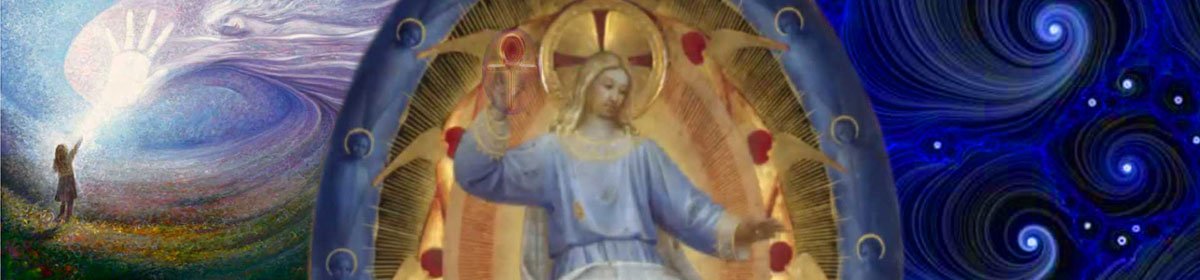
I then knew that here was something really important – it was to do with Life – that the Biology I learned at school had never touched. That should be called Necrology, not Biology! I was certain that what I’d perceived could be studied, and on encountering Rudolf Steiner, I found profound and extended confirmation. My picture above attempts to hint something of all this.
It seems to me now that it has been this practice that eventually, in time, opened up for me the two great subjects I have to share (and more: it is a living process). The first subject is the Star Ages, centred on the Incarnation of Christ, fully and very exactly in line with History, Astronomy, Astrology, Astrosophy, and the Bible: picking out hitherto unrecognized details.
The second subject is understanding Rudolf Steiner’s extraordinary gifts (and also what I have discovered as telling theme-linked limitations) in terms of more past lives of his that he did not talk about – and why. And all I have discovered about Steiner makes it clear to me why it should be he who brought to the world the precious “firstfruits” of Spiritual Science as Anthroposophy, detailing the Sevenfold /Threefold /Ninefold Man, and much more; often picking up older esoteric teachings relating to the heavenly spheres, Twelves and Sevens, and bringing them forwards. His Twelvefolding is some of his most telling work: the Twelve Philosophies, the Twelve Senses, the Twelve Animal Groups (and Twelve Insect Groups) and so on. I will open up this crucial subject later, in my “Firstfruits” post.

For now, I want to look at how we ourselves can really engage in this core understanding, and live out if it, in a way that fructifies the whole of our life – and does not fall back on “Steiner Said This and That” or any other system of mere belief. And this is Spiritual Science.
Back to my first paragraphs …
What characterises Science is, first, middle and last, Observation. Observation Without Judgement. And if Judgement arises (and this will happen, at times), that too can be simply Observed. And with Observation arises, in time, Stillness. And with Stillness comes Listening. Another kind of Observation. And at the right time – always it seems like when we are ready and a bit more – spiritual messages may start to be heard – or seen – or sensed. Understanding may flash into one’s thinking. In classical scientific experiments, formulas (these too are patterns) may pop into one’s mind, evolve, even be dreamed. One will find oneself inspired and motivated – often in a situation where inspiration was missing, a situation that was disheartening or whatever – as I started with, in this very article.
In the end, it is simple and beautiful …
Always, always, if one sits with a problem, essentially practising this observation I’ve described, solutions will start to appear, will start to come to mind.
… Pay Attention! …
When I returned to Glastonbury ten years ago, I asked Spirit what my task was now – being aware that Spirit had brought me back here. I got just two words: Pay Attention. This is essentially what I’ve been describing, using the word Observation here. So simple but so universal and so deep, in time, if one lives out of these two words. It accumulates understanding and quickens perception. It has to do with Raising Consciousness and Self-Awareness. It mirrors our breathing process, which alternates between Doing and Being – doesn’t it? Isn’t it pointing to what Yeshua said when he said he simply did what he saw his Heavenly Father doing?
In the end, it is so simple in essence, so rich in its outworkings (as I will show later in Firstfruits of Rudolf Steiner), so precious in its gifts to us. We need Spiritual Science today and, as far as I can see, we have every right to call what I’ve described, Spiritual Science.
